
Ketamine-Assisted Psychotherapy
A carefully guided therapeutic approach designed to support deeper healing
Ketamine Assisted Psychotherapy (KAP)
Ketamine-assisted psychotherapy helps create movement where things have felt stalled for a long time.
KAP is a powerful therapeutic modality. The results are typically felt immediately after treatment.
What Is Ketamine-Assisted Psychotherapy?
KAP is a therapist-guided approach designed to support deeper healing with the support of psychedelics (Ketamine).
Ketamine facilitates a non-ordinary state of consciousness.
Consciousness is explored deeply allowing for profound psychological insight, emotional release.
Guided by a trained therapist, this experience allows for an accelerated healing.
When to consider Ketamine-Assisted Psychotherapy?
The people drawn to this work are not falling apart on the outside.
They are the clients we serve who say, “I don’t trust anyone is strong enough to understand me”, “I have insight but still feel meh”, “I’m ashamed I’m struggling,” “why won’t this go away?”
When you have insight, have tried medication, and yet something still hasn’t changed.
Depression and treatment-resistant depression.
Burnout and emotional exhaustion.
Trauma and chronic stress patterns.
Anxiety and emotional overwhelm.
Disconnection, numbness, or feeling emotionally “stuck”.
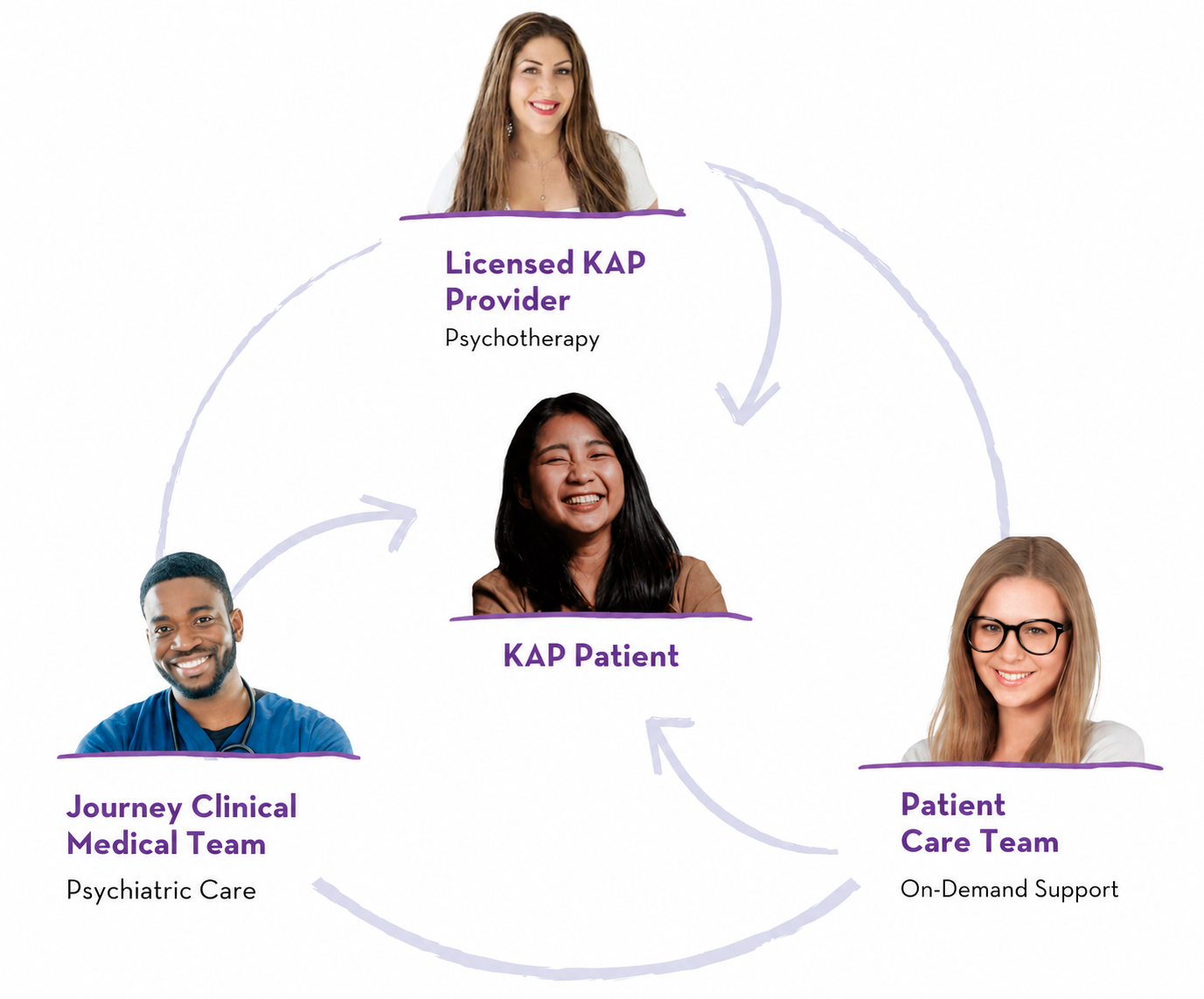
Our Approach
Our work draws on the latest in psychedelic therapeutic work, trauma-informed therapy, nervous system support, somatic practices, and mindfulness-based approaches.
How the KAP Process Works
1. Initial Consultation
We begin with a free 15-minute consultation to determine whether ketamine-assisted psychotherapy (KAP) may be a good fit for your needs and goals.
If appropriate, you will be referred to a Journey Clinical medical provider who will complete a medical evaluation, determine eligibility, and prescribe ketamine if clinically appropriate.
2. Preparation Session
Before your medicine session, we will meet virtually or in person to discuss the process, answer questions, establish safety and support, and clarify your intentions for the experience.
3. Medicine Sessions
During your KAP session, you will self-administer your prescribed ketamine lozenge while receiving therapeutic support in a structured and guided environment.
(Refer to FAQ below for questions about the actual experience).
4. Integration Sessions
Integration is a vital part of the process. Together, we will explore the emotions, memories, insights, and patterns that emerge during your sessions and discuss how to meaningfully apply them to your daily life and healing process.
5. Follow-Up Consultations
Most clients begin with an initial prescription of two ketamine sessions through Journey Clinical. After those sessions, you will meet with your Journey Clinical prescriber again to review your experience, response to treatment, and ongoing goals.
If appropriate, additional sessions may be prescribed. Treatment planning is based on your individual needs.
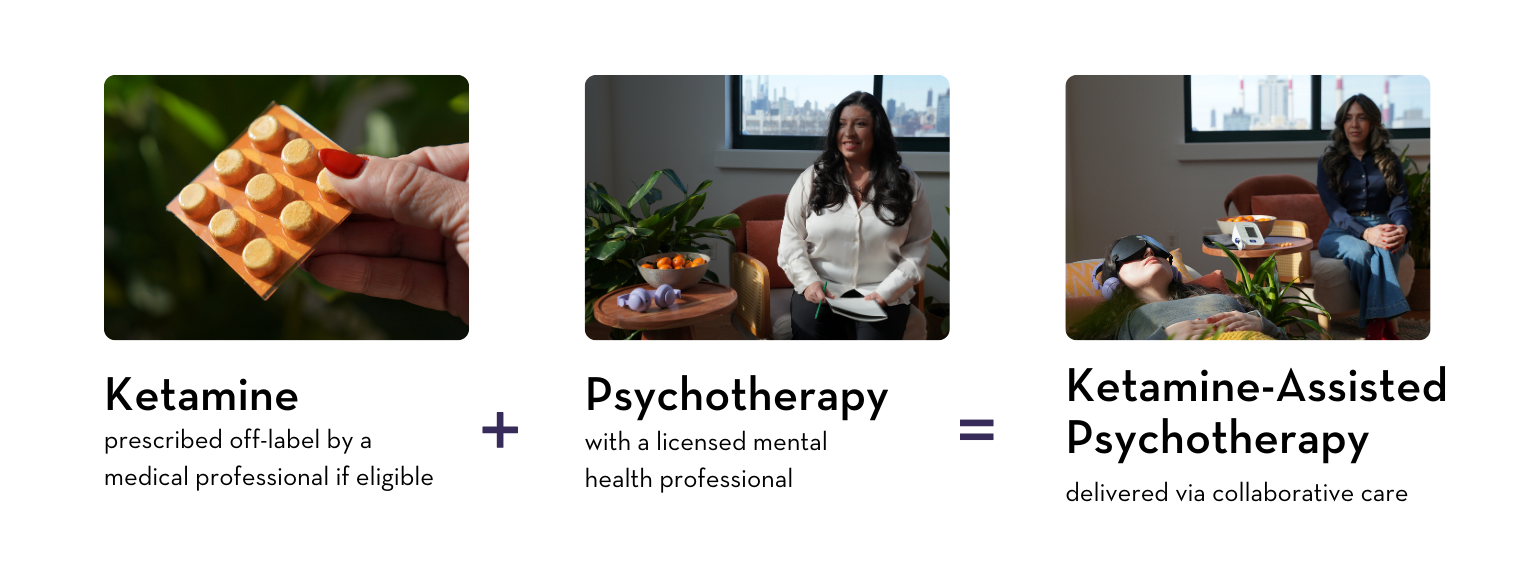

Our eyes record every experience. KAP helps reconnect the parts of ourselves the brain and body may have pushed aside or deprioritized.
FAQ
-
At its core, this work is about Science and Soul.
KAP often helps people reconnect with parts of themselves that have felt distant, buried, overwhelmed, or hard to access for a long time.
-
KAP is a unique therapeutic process that combines the psychedelic effects of ketamine with the supportive framework of psychotherapy.
Ketamine is a legal, safe, and effective medicine known to have antidepressant and mood-enhancing effects that begin as soon as 1-2 hours after treatment and can last for up to two weeks.
KAP helps facilitate communication within the parts of the brain that forgot, got buried or stopped talking to each other. Our eyes are essentially cameras recording everything we experience. The brain and body sometimes prioritize or deprioritize certain parts of ourselves.
Ketamine encourages neuroplasticity, which means that your brain has greater capacity to facilitate personal discovery, growth, and lasting change.
-
KAP is primarily used as a treatment for depression, anxiety, post-traumatic stress disorder (PTSD), and some substance use disorders. Additionally, KAP can be useful for anyone looking to experience profound and transformative experiences that can aid in personal growth, self-discovery, and spiritual exploration. People report they ‘miss’ themselves after the session.
At its core, this work often helps people reconnect with parts of themselves that have felt distant, buried, overwhelmed, or hard to access for a long time.
-
In my experience, KAP often resonates deeply with capable, thoughtful, and highly responsible individuals who have spent years holding everything together outwardly while quietly struggling internally.
It is people who give a lot and feel depleted.
Therapists, doctors, social workers, lawyers, primary caregivers, executives, founders, and other professionals often come to this work saying some version of this:
“I understand my patterns. I’ve done therapy. I’ve done the work. I know better. Why do I still feel this way?”
For many, there is shame around that question. They may look successful, emotionally intelligent, spiritual, self-aware, or “fine” from the outside, yet privately feel exhausted, disconnected, overwhelmed, emotionally flat, or unable to fully access relief through insight alone.
As a therapist and yoga teacher for nearly two decades within both clinical and holistic spaces, I also see many people in spiritual or wellness communities who carry deep understanding and self-awareness yet still struggle internally. They often feel pressure to already be regulated, healed, grateful, evolved, or “beyond” their pain, which can create another layer of shame and isolation when they are still suffering.
Many clients seeking KAP are not “falling apart.” They are functioning, caregiving, leading, achieving, and showing up for everyone else. It sits very cozily alongside chronic stress, grief, anxiety, depression, or emotional exhaustion beneath the surface.
We promote KAP because it aligns with our philosophy at Oak Tree. The relationship with yourself is the most important one you will ever have. You are whole and you know best, you do not need to outsource that authority.
Overtime, we forget ourselves, KAP helps you remember. KAP is not about escaping reality, bypassing emotions, or chasing altered states. It is a carefully guided therapeutic process designed to support deeper emotional access, nervous system flexibility, and meaningful change when traditional approaches have not fully created the shift someone is looking for.
-
Ketamine has been used medically for decades and is considered safe for many people when prescribed and monitored appropriately.
Before beginning any treatment, you will complete a medical evaluation with a licensed Journey Clinical prescriber to determine whether KAP is an appropriate fit for you.
Our approach emphasizes preparation, physical and emotional safety, therapeutic support, and integration.
Integration is key.
-
Most people remain aware of where they are and are still able to communicate during the experience. Some people feel deeply relaxed, emotionally open, reflective, or temporarily less connected to their usual thought patterns.
KAP is not about “checking out” nor is it a “wild high”. Most people report ease and a pleasant feeling. The goal is to create enough psychological flexibility to access emotions, perspectives, and experiences differently than you may in everyday consciousness.
You will be supported throughout the process and never expected to force anything emotionally.
-
The effects of ketamine, which most patients find pleasant, last for approximately 45 minutes to an hour.
The ketamine used in KAP is legally prescribed and provided within a medically supervised treatment model. This is not a ‘wild high’. KAP effects can facilitate shifts in perception that can often feel expansive in nature.
Ketamine can enhance or induce feelings such as creativity, purpose, perspective, serenity, insight, inspiration, gratitude, empathy, connection and openness to new ideas.
Your motor and verbal abilities will be reduced, so you’ll be lying down in a comfortable position during the experience.
-
Not necessarily. Many people continue taking their existing medications while participating in KAP. During your medical evaluation, the prescriber will review your current medications, medical history, and any possible interactions to determine what is safest and most appropriate for you.
-
We get this question a lot, and yes — that is completely okay!
Many people who explore ketamine-assisted psychotherapy are already working with an individual therapist. You do not need to be an ongoing therapy client at Oak Tree Counseling & Wellness to participate in KAP.
When appropriate, we can collaborate with your current therapist to help support continuity of care and a more integrated healing experience. We’ll help keep your therapist informed throughout the KAP process and work with you to create a post-treatment plan that you can continue exploring and implementing within your ongoing therapy.
-
Our main office is located in Falls Church, Virginia.
At this time, I offer virtual sessions via a HIPAA-compliant video conference platform.
We are licensed in Virginia, Washington, DC, Maryland, and Ohio.
-
It’s completely normal to feel both interested and nervous about KAP.
Many people who explore this work are thoughtful, cautious, and want to understand what they are stepping into before making a decision.
You are always welcome to schedule a complimentary consultation call to ask questions, learn more about the process, and determine whether this feels like an appropriate fit for you. If you are not approved through the medical evaluation process, you are not charged for treatment.
While I cannot connect prospective clients with former clients due to confidentiality, I can say that many people come into this work worried it will feel overwhelming, intense, or out of control, that they will uncover some horrible thing from their past and cannot handle it. In reality, when done within a structured and medically supervised therapeutic setting, most people experience it very differently than they expected. This is not about getting “high” or losing yourself. The process is intentional, contained, and carefully guided.
Some of the most meaningful feedback I have heard afterward has been surprisingly simple:
“I miss myself.”
“I finally feel clarity.”
“I feel like myself again.”
One client once told me he felt like I was his spirit guide, which made me laugh a little, but I understood what he meant. Sometimes people are not looking to become someone new. They are trying to reconnect with parts of themselves they have not been able to fully access in a very long time.
-
KAP is offered through structured treatment packages that include preparation, dosing, and integration sessions.
Most clients begin with either:
a two-session pathway
or a more extended four-session process
Package pricing is reviewed during consultation based on your goals and level of support needed.
Journey Clinical Medical Costs
Journey Clinical independently charges for:
Medical intake evaluation
Prescription management
Ketamine prescription
Current medical intake pricing through Journey Clinical is approximately $347 for evaluation and an initial two-dose prescription, though pricing may change over time.
CareCredit and payment options may also be available.
-
We understand that many clients seeking KAP value privacy, discretion, and a more individualized level of care. Because KAP services are offered privately rather than through insurance billing, treatment can remain more contained and personalized to your needs
Why do people choose Oak Tree for KAP?
Our work is rooted in both clinical depth and nervous system awareness. We do not approach ketamine as a stand-alone experience or quick emotional escape.
Our approach emphasizes preparation, physical and emotional safety, therapeutic support, and integration.
This work is for when something deeper still feels unresolved and you want rapid results within a contained therapeutic framework.
At Oak Tree, KAP is integrated thoughtfully within a therapeutic relationship that includes preparation, emotional processing, and integration.
Depending on your needs, sessions may incorporate trauma-informed therapy, yoga, mindfulness, somatic approaches, brainspotting, and nervous system-focused work.
The focus is not just symptom relief but helping people reconnect with themselves.